Types of Necklaces for Women: Popular Styles and How to Wear Them
Short Answer
The most popular necklace styles for women include chain necklaces, pendant necklaces, choker necklaces, statement necklaces, pearl necklaces, beaded necklaces, layered necklaces, and lariat necklaces. Each type suits different necklines and occasions. Start with the right length, then choose a style that fits your outfit and mood.
Key Takeaways
- Necklace length decides where it sits on your body. Get the length right first, then choose the style.
- Choker necklaces (14 to 16 inches) work best with open necklines like V-necks and off-shoulder tops.
- Pendant necklaces suit almost every outfit and work well for daily wear.
- Statement necklaces need a simple outfit to stand out. Keep other jewelry minimal.
- For layering, each necklace should be at least two inches longer than the one above it.
- Pearl and beaded necklaces add color and texture to plain, solid-color outfits.
- Long necklaces pair best with high necks and turtlenecks.
- Short necklaces shine with strapless, off-shoulder, and wide open necklines.
A pendant that looks perfect on a mannequin can sit wrong on you if the chain is two inches off. That's because a necklace's length decides where it lands on your chest, and that spot decides which necklines and outfits actually work with it. This guide covers the necklace styles you'll come across most often — chains, pendants, chokers, collars, statement pieces, layered sets, pearls, beads, lariats, and tennis necklaces — what makes each one different, and which lengths and necklines suit them.
Start With Length
Before comparing styles, figure out length. It's the measurement that tells you whether a necklace will rest at your throat, your collarbone, or somewhere past your ribcage, and each of those spots calls for a different neckline.
- 14 to 16 inches (choker/collar): sits at or just below the throat
- 18 inches (princess): falls right at the collarbone, the length most outfits are built around
- 20 to 24 inches (matinee): sits between the collarbone and bust, useful under blazers and collared shirts
- 28 to 36 inches (opera): hangs below the bust, best saved for turtlenecks and high necks
- 36 inches and longer (rope): falls to the stomach or lower, and can usually be doubled for a shorter look
If you're buying one necklace and want it to work with most of your wardrobe, 18 inches is the safer bet. It's long enough to clear a crew neckline without looking like it's choking you, and short enough to still show above a V-neck or button-down.
Popular Necklace Styles for Women
Here's a full breakdown of all the key necklace names and types. Each one has its own look and its own best uses.
Chain Necklaces

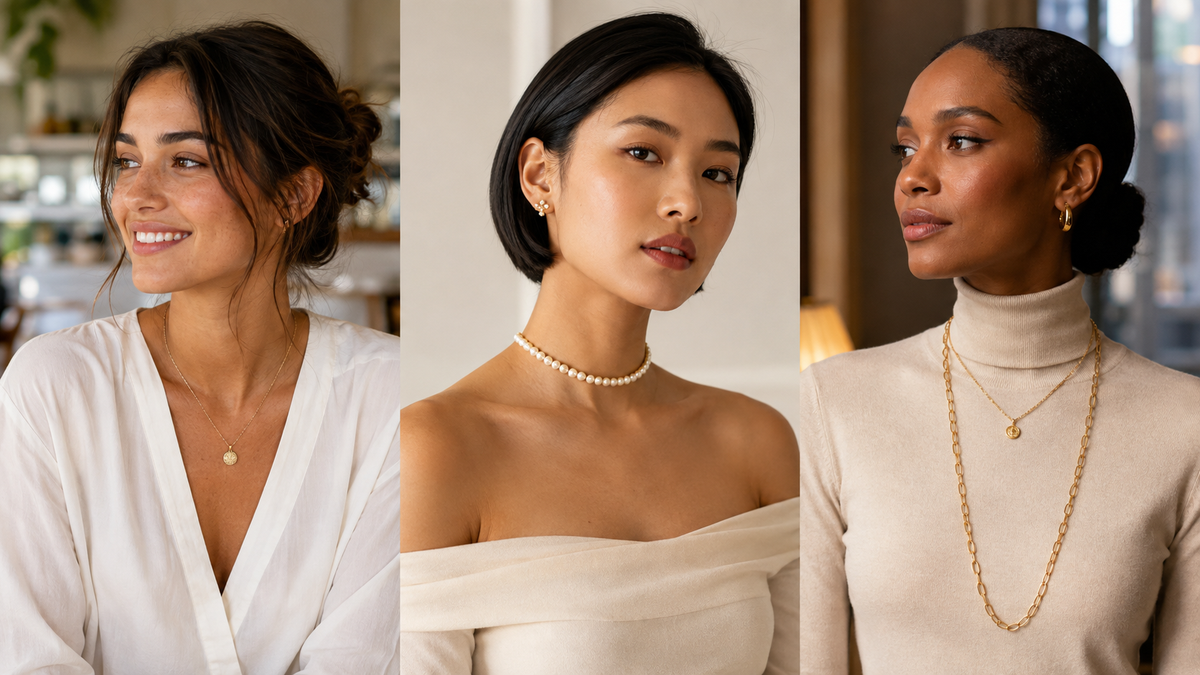
Strip away the pendant and what's left is a chain necklace: linked metal, worn alone or stacked in a few different lengths at once. Worn alone it's the simplest possible necklace, just metal against skin. Worn three at a time in different lengths, it becomes a layered look without a single pendant involved.
The name on the tag usually tells you the link shape:
- Cable chain — round, uniform links; the everyday default
- Snake chain — smooth, tube-like links with almost no visible gaps; reads sleek and modern
- Figaro chain — short links followed by one longer link, repeated in a pattern; common in gold pieces
- Box chain — square-cut links that sit flat and hold weight well, which is why it often carries pendants
- Rope chain — links twisted into a spiral for a textured, rope-like finish
One thing worth clearing up: "rope chain" describes that twisted link pattern, not necklace length. A rope chain can be short or long. "Rope length," from the list above, means anything past 36 inches, whether the links are twisted or not — the two terms just happen to share a word.
Pendant Necklace

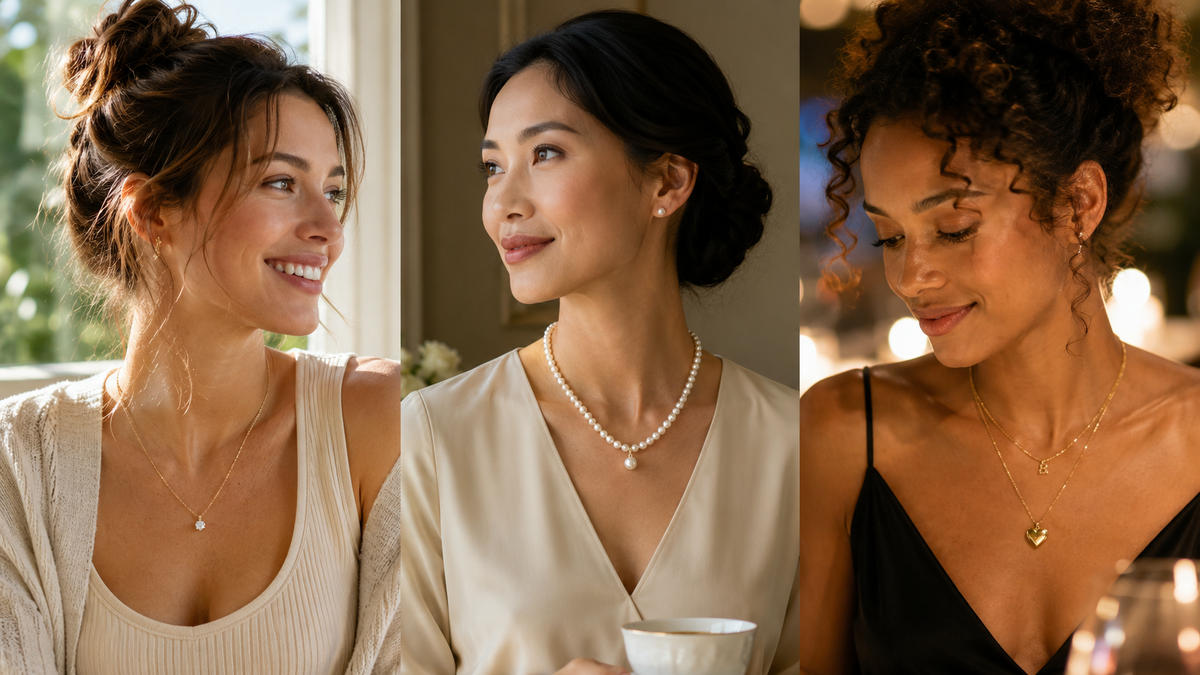
Pendant necklaces pair a chain with one hanging piece: a stone, a charm, an initial, a symbol, whatever the wearer wants front and center. It's the most common necklace style for a reason. It works for the office, for a night out, and for a gift, without much thought required about matching.
The balance between chain and pendant matters more than people expect. A large or heavily detailed pendant reads best on a plain chain, since a busy chain competes with it. A small, delicate pendant can afford a chain with more texture or thickness, since there's nothing else pulling focus.
Choker and collar Necklace

Both sit close to the neck, and both get lumped together, but they're built differently. A choker is a strand — chain, velvet, pearl, or gemstone-set — that circles the throat at 14 to 16 inches. A collar necklace is flatter and more structured, usually 12 to 14 inches, and it lies against the collarbone rather than wrapping the throat itself.
Both work well with necklines that leave the throat and collarbone exposed: V-necks, strapless tops, off-shoulder cuts. Skip either one with a turtleneck or high collar. The fabric covers most of the piece, and whatever's left peeking out above the collar won't read as intentional.
Statement Necklace

Statement necklaces are built to be noticed first: oversized stones, heavy metalwork, or layered elements that take up real space on the chest. They only work if the rest of the outfit gets out of the way. A plain top or a solid-color dress gives one room to stand out; busy prints or large earrings compete with it, and the whole look ends up crowded instead.
Layered Necklace

Layering means wearing two or more necklaces of different lengths at once, stacked rather than overlapping. The starting rule is simple: put the shortest piece closest to your neck, and give each piece below it at least two extra inches of length. A 14-inch choker, an 18-inch pendant, and a 22-inch chain is a workable combination straight off that length chart above.
Two things separate a deliberate layered look from an accidental tangle: mixing textures, so a fine chain sits next to something with more visible link detail, and keeping the metal tone consistent, all gold or all silver rather than mixed. You can buy necklaces sold as pre-layered sets, or build the combination yourself from pieces you already own.
Pearl Necklaces

Pearl necklaces are defined by material more than by length, and the material itself comes in a few distinct forms. A traditional strand uses pearls of matching size throughout. A graduated strand starts small at the clasp and grows larger toward the center front. A baroque strand uses irregularly shaped, non-round pearls, which gives it a rougher, more handmade look than a uniform strand has.
Pearls don't have to read as dressy. A short pearl choker worn over a plain T-shirt looks noticeably more casual than the same strand worn with a blouse, simply because the rest of the outfit is doing less work.
Beaded Necklaces

Beaded necklaces string together gemstones, crystals, glass, or wood, bringing in color a metal chain can't. A turquoise strand against a white top, or a deep red strand against a black dress, does more visual work than most pendants would in the same spot. Because the beads are usually lightweight, these necklaces also tend to sit more comfortably against skin in hot weather than a heavier metal piece would.
Lariat Necklaces

A lariat has no clasp. It's an open strand that loops or drapes around the neck and falls into a Y-shape, with both ends hanging free down the front of the outfit. Because there's no fixed closure, you can slide the knot up or down to change exactly where it sits and how it falls against a deep V or a plunging neckline. The same piece works over a plain high-neck sweater for a more relaxed, layered effect; the shape changes with how it's tied, but the necklace itself doesn't need adjusting.
Tennis Necklaces

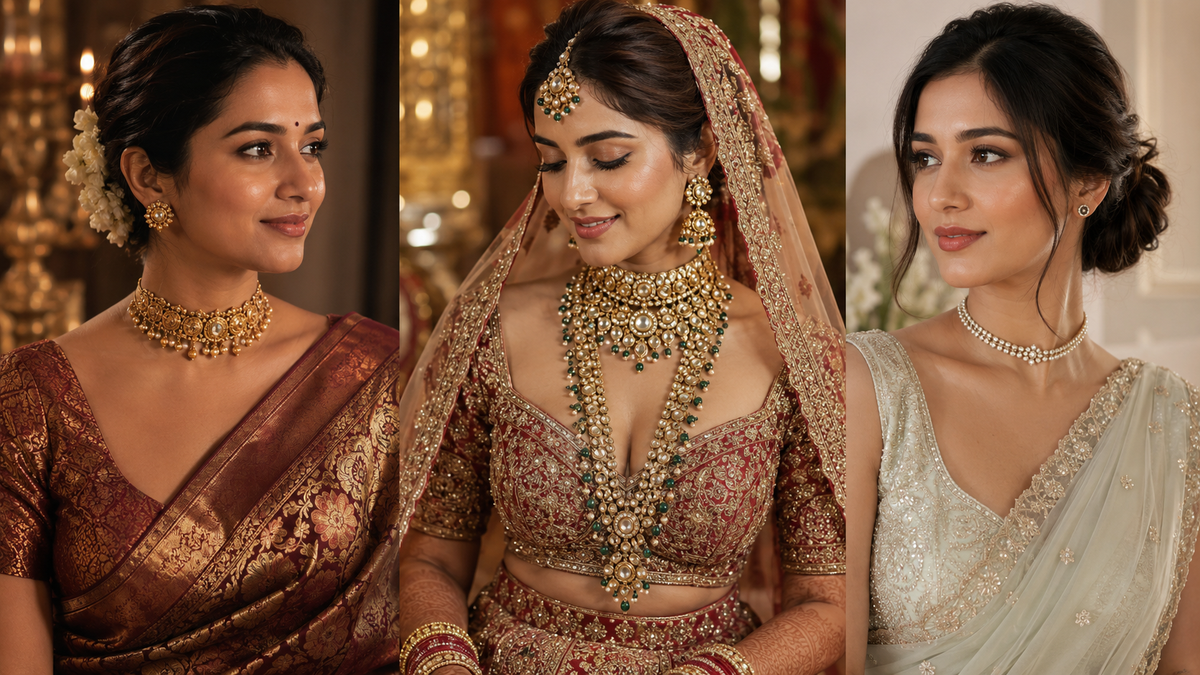
Tennis necklaces line up same-size gemstones in a continuous row that sits neatly around the neckline rather than hanging from it. They used to be reserved mostly for formal events, though they're now worn just as often with everyday outfits. A tennis necklace sits low-key against the neckline instead of standing out the way a chunkier statement piece would, which is what makes it work for a dinner date, an office outfit, or a wedding. It also layers cleanly with a plain chain or a small pendant, since it doesn't compete with either.
Once you know the styles, matching them to what you're wearing comes down to one idea: open necklines usually pair with shorter, more structured pieces, and high necklines need length to have any visual effect at all.
| Neckline | Necklace style that usually works |
|---|---|
| V-neck | Pendant or lariat, since both follow the line of the V |
| Round or crew neck | Choker, or an 18-inch pendant |
| Off-shoulder | Collar or statement necklace |
| Strapless | Collar, bib, or a chunky choker |
| Turtleneck or high neck | Opera-length chain, or layered long necklaces |
| Boat neck | Long pendant or layered pieces |
| Deep V or plunge | Lariat or long pendant |
One more point worth keeping in mind: a busy or heavily printed outfit usually reads better with a simple metal chain, since a bold necklace on top of a bold print competes with itself. A plain, solid-color outfit is where a statement piece or a beaded necklace has room to actually show.
A small, well-chosen collection covers more ground than a large one bought without a plan: one chain at 18 inches, one choker, one longer piece for turtlenecks, and a pendant or two you can swap in and out. That combination, more than any single trendy piece, is what tends to get worn week after week. If you're building toward that, the Mystic Dews necklace collection is organized by length and style, which makes it easier to spot what's actually missing from your jewelry box rather than buying another version of what you already own.
Conclusion
There's a necklace for every outfit and every mood. You just need to know where to start.
Lead with length. Then pick a style based on your neckline and occasion. Short necklaces like chokers and collars work best with open and wide necklines. Long necklaces come alive with high necks and turtlenecks. Pendant necklaces are your daily go-to. And statement pieces? Those are for when you want the room to notice you first.
Building a smart necklace collection doesn't need to cost a lot. A few well-chosen pieces at different lengths will cover most outfits you already own.
Ready to find your next favorite piece? Explore the Mystic Dews collection for handpicked necklace styles built for real women and real outfits. From delicate chains to bold layered looks, there's something for every style and every occasion.
FAQs
What are the most popular necklace styles for women?
The most popular styles include pendant necklaces, chain necklaces, choker necklaces, statement necklaces, and pearl necklaces. Each works for different outfits and occasions.
What necklace length is best for everyday wear?
An 18-inch princess-length necklace is the most practical for daily use. It sits right at the collarbone and works with most necklines.
Can you layer different necklace types together?
Absolutely. Start with a short choker at the top and add longer pieces below. Keep each piece at least two inches apart. Matching the metal color keeps the layered look clean and cohesive.
What necklace goes best with a V-neck top?
A pendant necklace or lariat works best with a V-neck. Both styles follow the downward shape of the neckline in a very natural way.
What is the difference between a choker and a collar necklace?
A choker is 14 to 16 inches and sits just below the throat. A collar necklace is 12 to 14 inches and lies flat against the collarbone with a wider, more structured shape.
What is a lariat necklace?
A lariat is a long, open-ended necklace with no clasp. It loops or ties around the neck and hangs in a Y-shape down the front. It works great with plunging necklines.
Are beaded necklaces still popular?
Yes. Beaded necklaces have made a strong comeback. Gemstone strands and colorful bead styles look especially great with casual and warm-weather outfits.
About the Author
The Mystic Dews writing team covers jewelry, personal style, and everything in between. They focus on practical, down-to-earth advice that helps women shop smarter, style with confidence, and wear what they love every single day.