Types of Artificial Jewellery: Imitation Jewellery Buying Guide
Short Answer
Artificial jewellery can be classified into various types which can be broadly categorized by material and style of design. Some of the popular materials used are brass, copper, lightweight metal alloys, cubic zirconia stones (gems), glass, and resin. Design styles include oxidised silver finish, kundan and polki design, temple jewellery designs, and American diamond designs. Artificial jewellery should have a combination of a durable base metal and high-quality plating to look luxurious and last.
Key Takeaways
- There are many different types of artificial jewellery that can be used to achieve different aesthetics.
- Artificial jewellery can vary by base metal, stone used, and type of finish.
- Brass and copper bases are much better at retaining plating than inexpensive lightweight alloys.
- Cubic zirconia stones are known by some as American diamonds and provide brilliance for a fraction of the cost.
- Oxidized silver jewellery matches well with casual and Indo-western clothing.
- Kundan and polki jewellery is great for weddings and other festivities.
- Thicker plating of gold or silver will prevent fading and reduce skin reactions.
- All types of artificial jewellery will last longer with proper storage.
You bought that stunning necklace set for under a thousand rupees and it looked like a million bucks at the wedding. Then two months later, the gold colour started peeling off near the clasp. Sound familiar? That is honestly the story of most people's first brush with artificial jewellery. It is not that the whole category is bad. It is that nobody explained the difference between a design built to last and one built to look good for exactly one photo. This artificial jewellery buying guide walks through the different types of artificial jewellery out there, from raw materials to finished styles, so you can shop with real confidence next time.
What Counts as Artificial Jewellery
Artificial jewellery, also called imitation jewellery or fashion jewellery types, covers any design made without precious metals or natural gemstones. Instead of gold, platinum, or mined diamonds, these designs use brass, copper, alloy metals, and stones like cubic zirconia or glass.
This entire category exists for one simple reason. Real jewellery costs a lot, and most people want more than a design or two in their collection. Artificial jewellery types let you own a stack of earrings, several necklace sets, and a whole box of bangles, all without spending what a single gold chain would cost.
Materials Used in Artificial Jewellery
Getting a handle on artificial jewellery materials is honestly the first step toward buying designs that actually last. Different materials behave very differently once they leave the shop and meet your daily life.
Base Metals
The base metal decides how sturdy a design feels in your hand and how well it holds up over months of wear.
Brass is probably the most common base metal in Indian artificial jewellery. It is heavier, holds plating far better than lighter metals, and looks close to real gold once plated well.
Copper often sits underneath gold or silver plating too, since it adds strength without adding much weight. It is also a common base for oxidised silver designs, since copper takes that antique dark finish beautifully.
Lightweight alloy metals, often a mix of zinc and other cheap metals, show up a lot in budget designs. They cost less, but the plating on these bases tends to chip and fade a lot faster than brass or copper.
| Base Metal | Feel | How Long Plating Lasts |
|---|---|---|
| Brass | Sturdy, slightly heavy | Long, often three to five years with care |
| Copper | Medium weight, strong | Good, especially under oxidised finishes |
| Alloy (zinc mix) | Very light | Short, often under a year |
| Stainless steel | Light but tough | Very long, resists tarnish well |
Stones and Crystals
Synthetic cubic zirconia, sometimes known as American diamond in India, is by far the most popular diamond simulant in use today. It reflects light in a very similar way to a real diamond, for a small fraction of the price.
Cut glass stones operate on the same principle, although they typically have slightly less sparkle than cubic zirconia. You'll find both of these stones used everywhere in bridal and party jewellery, as they offer real sparkle without real expense.
Finishes and Coatings
Resin and acrylic give modern jewellery designs bold colour and a lightweight feel. Jewelry designers can craft vibrant, whimsical earrings and bangles using these materials that would be prohibitively heavy if made from solid metal.
Enamel work, particularly meenakari work, can also add rich colour and detail to traditional style artificial jewellery. Enamel looks great on oxidised silver, lending a piece a handcrafted charm.
Popular Styles of Imitation Jewellery
Now that the materials are clear, here are the different types of imitation jewellery you will actually see in shops and online.
Oxidised Silver

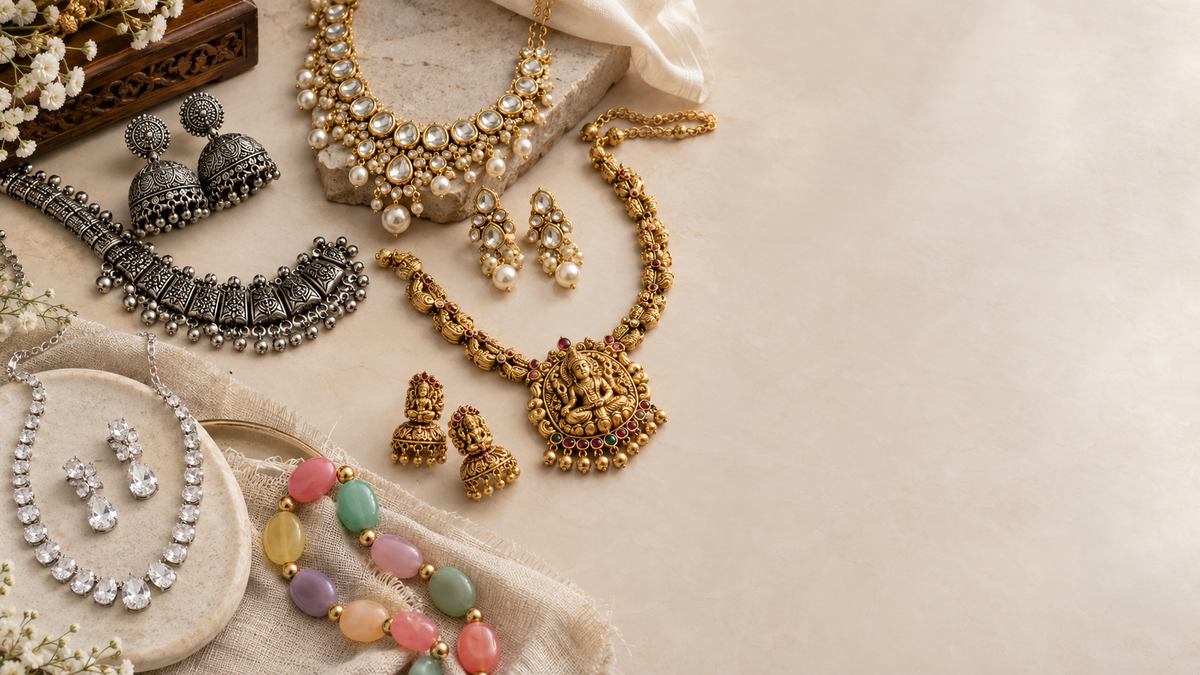
Oxidised jewellery carries a dark, antique metallic finish that has become genuinely popular for casual and festive wear alike. This style pairs beautifully with cotton kurtas, denim, and Indo-western outfits.
The dark finish is not tarnish gone wrong either. It is a deliberate design choice, created on purpose to give the metal that aged, earthy look people love so much.
Kundan and Polki

Kundan jewellery uses glass stones set into gold foil. This creates a flat and genuinely brilliant shine. Polki takes a slightly different path. It uses stones with a raw, uncut look for a more vintage feel.
Both styles remain top choices for weddings and festive celebrations. Since real kundan and polki jewellery costs a genuine fortune, the artificial versions let far more women enjoy that same regal look.
Temple Jewellery

Temple jewellery replicates the traditional South Indian designs seen carved into temple walls for centuries. Deity motifs, floral patterns, and a heavy gold polish all define this style.
This category suits South Indian weddings, classical dance performances, and any occasion that calls for real heritage and heft.
American Diamond and CZ

American diamond jewellery, built around cubic zirconia stones, brings a clean and modern sparkle to formal outfits and gowns. This style suits cocktail parties, receptions, and western wear beautifully.
The setting usually stays sleek and contemporary, which sets American diamond designs a bit apart from the more ornate kundan and temple styles above.
Beaded and Resin Jewellery

Beaded jewellery uses wood, glass, or stone beads strung together for a casual, boho look. Resin jewellery brings bold colour and playful shapes, often used in earrings and statement necklaces.
Both styles work beautifully for everyday wear and casual outings, since they stay light and genuinely comfortable through a full day.
| Style | Best Occasion |
|---|---|
| Oxidised silver | Casual outings, Indo-western looks |
| Kundan and polki | Weddings, festive celebrations |
| Temple jewellery | South Indian weddings, cultural events |
| American diamond (CZ) | Parties, gowns, western wear |
| Beaded and resin | Everyday wear, casual outings |
How to Choose Artificial Jewellery: A Buying Guide
The right artificial jewellery choice genuinely comes down to a handful of details most people skip past too quickly.
Check the Plating
Gold, silver, or rhodium plating that’s thickly applied will keep colour from fading quickly and reduce skin irritation. Cheap jewellery has a thin layer of plating that’ll come off in weeks instead of years.
If the seller doesn’t mention what metal your pieces are or how thick that plating is, consider that a red flag. Reputable sellers won’t mind letting you know.
Match the Style to the Occasion
Just because you can wear artificial jewellery anywhere, doesn’t mean you should. A chunky kundan set isn’t ideal for daily wear, and your plain gold studs shouldn’t take centre stage at your cousin’s wedding. Consider how often you’ll wear the piece and where you’ll wear it when deciding on details and price.
Basic sets should include a couple of pairs of studs, one fine chain, and at least one dazzling set for special occasions. Build off of those foundations as you grow your collection.
Keep Comfort in Mind
Artificial earrings and necklaces can get uncomfortable if they’re too heavy. Prioritise comfort when choosing statement pieces that you’ll wear all day long.
Set a Sensible Budget
Very cheap artificial jewellery, will be plated thin, weigh less, and fall apart faster. Try to avoid pieces that cost less than a few hundred rupees.
That being said, one nicely crafted piece is almost always worth more than three poorly made pieces. Don’t purchase every artificial jewellery piece you find just because you spent little.
Caring for Artificial Jewellery
A little care honestly can extend the life of any artificial jewellery design by years instead of months.
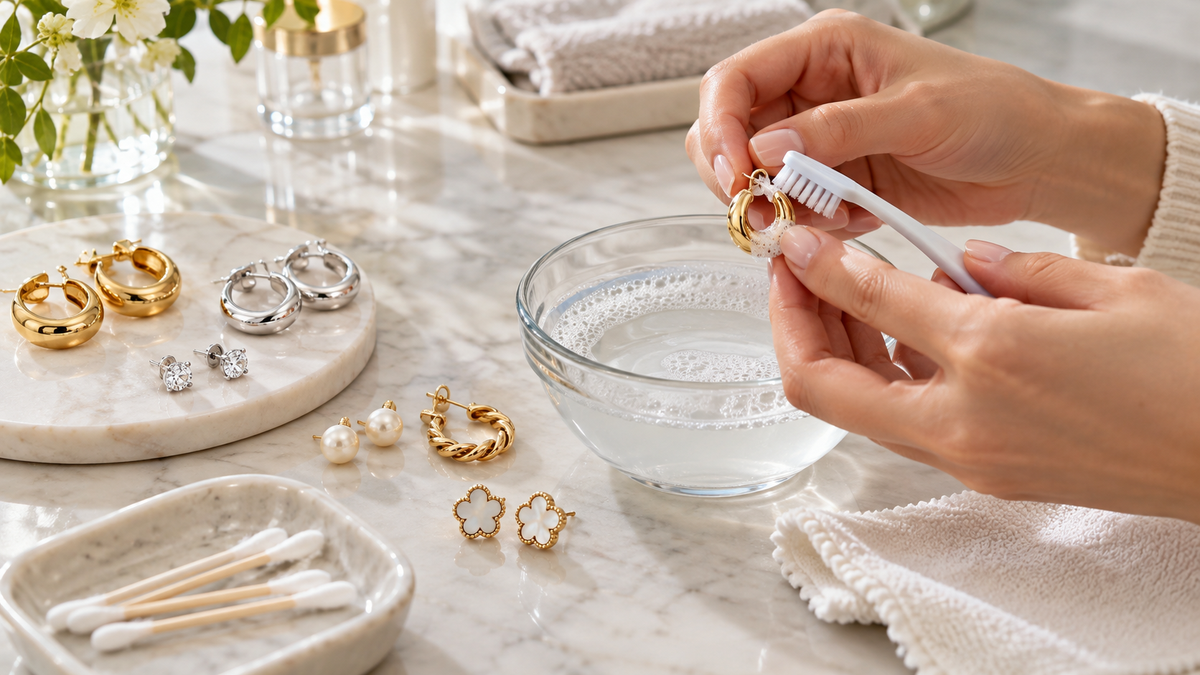
Keep jewellery away from water, perfume, and lotion as much as possible. Put your makeup and perfume on first, then wear jewellery last. Remove everything before jumping in the shower, swimming, or going to the gym.
Store individual designs in a soft pouch or lined box. When jewellery designs rub against each other in a drawer they scratch each other and rub the plating away over time. Including a tiny silica gel packet in your jewellery box helps absorb extra moisture too. This is honestly one of the leading causes of fading when you live in humid areas.
Conclusion
Artificial jewellery has come a long way from being just a cheaper stand-in for the real thing. With the right base metal, a good plating layer, and a style that matches your outfit and event, these designs can look rich, feel comfortable, and last for years. Know your materials, match your style to your occasion, and take a little care of what you buy. That is honestly the whole secret behind building a fashion jewellery collection that keeps looking good long after you bring it home.
Looking for artificial jewellery built with real care and lasting plating? Mystic Dews carries a lovely range of oxidised, kundan, and CZ designs at prices that make building your collection easy. Browse the Mystic Dews collection and find your next favourite design today.
Frequently Asked Questions (FAQs)
What are the main types of artificial jewellery?
The main artificial jewellery types include oxidised silver, kundan and polki, temple jewellery, American diamond or CZ designs, and beaded or resin jewellery. Each style suits a different outfit and occasion.
What materials are used in artificial jewellery?
Common artificial jewellery materials include brass, copper, alloy metals, cubic zirconia stones, glass, resin, and enamel. Brass and copper bases tend to hold plating better than lightweight alloys.
How do I choose good quality artificial jewellery?
Check the base metal and plating thickness first. Thick gold, silver, or rhodium plating lasts far longer and lowers the chance of skin irritation. Match the design to your occasion and set a sensible budget too.
Is oxidised jewellery a type of artificial jewellery?
Yes, oxidised silver is one of the most popular artificial jewellery styles. It uses a deliberately dark, antique finish that suits casual and festive Indo-western looks beautifully.
What is the difference between kundan and polki jewellery?
Kundan uses glass stones set into gold foil for a flat and brilliant shine. Polki uses stones with a raw, uncut look for a more vintage feel. Both suit weddings and festive occasions.
How long does good artificial jewellery last?
Well made artificial jewellery, with a sturdy base metal and thick plating, can last three to five years with proper care. Cheaper designs with thin plating often fade within months.
Can artificial jewellery cause skin irritation?
Some cheap alloy bases can irritate sensitive skin. Choosing hypoallergenic designs, or ones with thick gold or silver plating, lowers that risk a lot.
About the Author
The Mystic Dews writing team loves jewellery and helping people understand what actually makes a design worth buying. We share honest guides and practical tips so you can build a fashion jewellery collection that looks good and lasts.