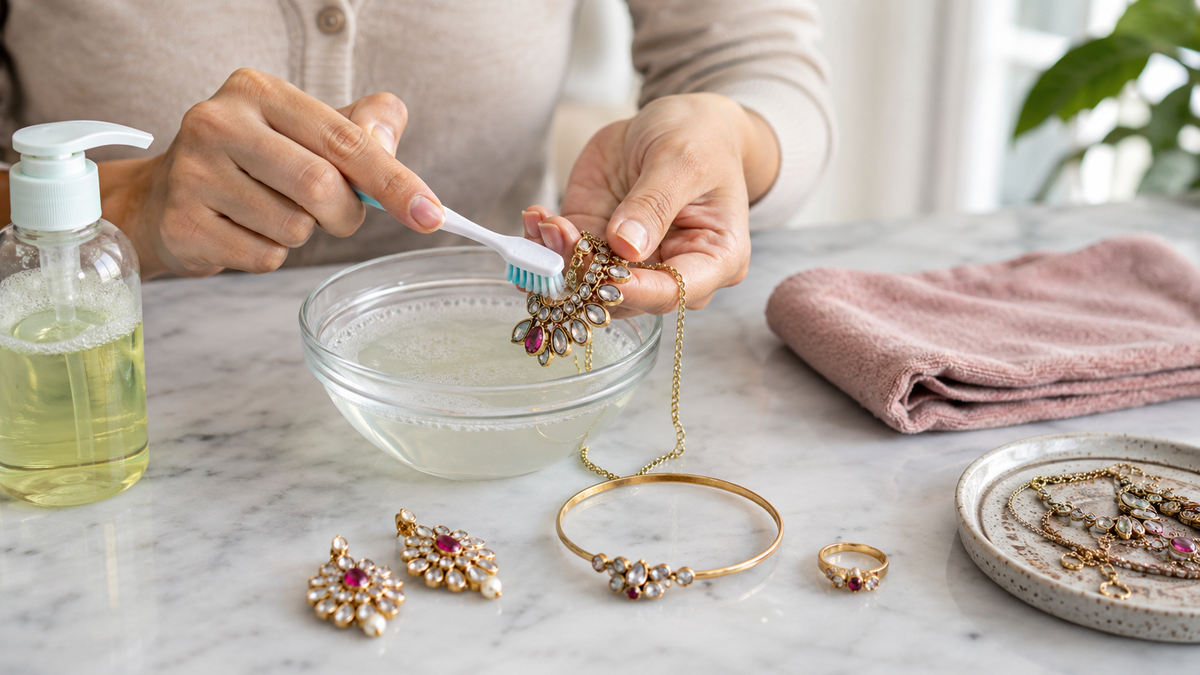
How to Clean Costume, Fake & Imitation Jewellery at Home
Short Answer: Mix a few drops of mild dish soap into warm water. Dip a soft toothbrush into the mix and scrub gently. Rinse quickly under cool water. Dry it right away with a soft cloth. Never soak pieces that have glued stones on them.
Key Takeaways
- Mild soap and warm water work well for most fake jewellery
- Never soak pieces in water too long. Glued stones can fall right off.
- Dry your jewellery straight away after every clean to stop rust
- Store each piece in a dry, airtight bag when not wearing it
- Skip harsh chemicals like bleach on plated surfaces
- Always put on perfume and lotion before putting your jewellery on
That Dull, Greenish Necklace Sitting in Your Drawer
You pull out your favourite necklace and it looks dull. A little green around the edges maybe. Not quite the sparkle it had when you first bought it. Don't throw it out just yet. With a few things you already have at home, you can bring it back to life in minutes.
What Is Costume or Imitation Jewellery?
Costume jewellery, also called fake jewellery or imitation jewellery, is made from metals like brass, copper, or zinc. Most pieces have a thin layer of gold or silver coating on top. Some have glass stones, resin gems, or plastic beads stuck on with glue.
That thin coating is the tricky part. It can chip, peel, or fade with the wrong cleaner. So the goal is simple: clean gently, dry fast, and store smart.
How to Clean Fake Jewellery at Home: The Best Methods

Start with the gentlest option. Move up only if you need to.
Mild Soap and Warm Water
This is the safest way to clean most costume jewellery. Mix a few drops of mild dish soap into a bowl of warm water. Dip a soft toothbrush into the solution. Gently scrub the piece. Pay close attention to small corners and crevices. Rinse quickly under cool water. Pat it dry right away with a soft cloth.
Don't let it sit in the water. Even a few extra minutes can cause the metal to rust or the coating to start peeling. Get it clean fast. Get it dry fast. Simple as that.
Baby Shampoo Method
Baby shampoo is extra gentle. It works really well on pieces with pearls or delicate enamel. Mix one small drop of baby shampoo with a bit of warm water. Use a cotton swab or soft toothbrush to clean the piece. Rinse off fast and dry right away. Great for earrings and rings.
Baking Soda Paste
Got a badly tarnished brass or copper piece? Baking soda can help. Mix a small spoon of baking soda with just enough water to make a thick paste. Rub it onto the jewellery with a soft cloth. Let it sit for about a minute. Rinse it off well and dry it right away.
Use light pressure only. Baking soda is slightly rough. It can scratch softer metals if you press too hard.
Aluminium Foil Trick
This one feels like a tiny science experiment. Line a bowl with aluminium foil, shiny side up. Add a tablespoon of baking soda and a tablespoon of salt. Pour in warm water. Drop your silver-toned piece in for just a few seconds. Take it out, rinse it quickly, and dry it at once. A few seconds is all it takes. Don't leave it in any longer.
Lemon Juice
Lemon cuts through rust and dull build-up on metal really well. Squeeze some lemon juice onto a soft cloth. Rub it gently over the jewellery. Rinse off quickly and dry straight away. You can add a tiny pinch of salt to the lemon juice for tougher spots. This method works especially well on brass and silver-toned pieces.
Baby Wipes for a Quick Daily Refresh
No time for a full clean? A plain baby wipe gets the job done. Use one with no fragrance and no alcohol. Gently wipe the surface of the piece. It picks up oils, sweat, and dust in seconds. Let it air dry for a minute before putting it away. Build this habit and your jewellery will stay cleaner for much longer.
How to Remove Tarnish from Fake Jewellery

Tarnish is that dark, dull coating that slowly builds up on metal. It forms when metal reacts with air, sweat, and moisture. It's a bit like how a cut apple turns brown the moment you leave it sitting out on the bench.
You can remove tarnish from fake jewellery at home with things you already have:
- Lemon juice mixed with a pinch of salt for brass and copper pieces
- Baking soda paste for most tarnished metals
- White vinegar wiped on with a cloth for light tarnish on silver-toned pieces
Dry the piece fast after cleaning. That one step goes a long way in stopping tarnish from coming back too soon.
How to Clean Gold Plated Jewellery
Gold plated jewellery needs extra care. The gold layer on top is very thin. Rough scrubbing or harsh chemicals wear it down fast.
Here is how to clean it safely:
- Use only mild soap and warm water
- Use a super soft cloth or a baby toothbrush
- Apply very light pressure only
- Rinse quickly and dry right away
- Avoid baking soda paste on gold plated pieces. It dulls the coating.
If the gold layer is already chipping or peeling, skip the scrubbing altogether. Just wipe it softly with a barely damp cloth.
Mistakes to Avoid When Cleaning Imitation Jewellery
These mistakes can do more damage than the tarnish itself. Watch out for these:
- Soaking jewellery with glued stones in water. The glue loosens and stones fall off.
- Using bleach or strong cleaners. They strip the metal coating in no time.
- Using whitening toothpaste. It's too rough. It scratches plated surfaces badly.
- Leaving pieces wet. Even a short time damp in a drawer causes rust.
- Cleaning all pieces the same way. Brass, copper, and silver-toned metals each react differently to cleaners.
Dodge these and your jewellery will last a lot longer.
How to Store Imitation Jewellery to Keep It Shiny

Cleaning is only half the job. How you store your pieces matters just as much for keeping them looking great.
Air and humidity are the real culprits behind fast tarnishing. It's like leaving a silver spoon out on a humid day. It goes dull fast. These simple storage steps help a lot:
- Store each piece in a small zip-lock bag. Squeeze the air out before sealing.
- Use anti-tarnish strips in your jewellery box. They absorb moisture and slow down tarnishing.
- Keep pieces separate to avoid scratching and tangling.
- Find a cool, dry spot away from bathroom shelves or windows.
- Wrap delicate pieces in a soft cloth before placing them in a box.
Small Habits That Stretch the Life of Your Jewellery
You don't have to deep-clean your jewellery every week. A few small daily habits do most of the heavy lifting.
Put on perfume, lotion, and hairspray first. Let them dry on your skin. Then put your jewellery on. This cuts down on chemical build-up on the metal surfaces. After wearing, give each piece a quick wipe with a dry cloth. It removes sweat and oils before they have time to cause any damage.
Take your jewellery off before swimming, showering, or doing the dishes. Regular tap water seems harmless, but even that speeds up tarnishing on fake pieces over time.
Quick Reference: Best Cleaning Methods at a Glance
| Method | Best For | Key Tip |
|---|---|---|
| Mild soap and water | Most pieces | Dry fast |
| Baby shampoo | Pearls, enamel, delicate pieces | Rinse quickly |
| Baking soda paste | Brass and copper tarnish | Use light pressure |
| Lemon juice | Silver and brass tarnish | Rinse well |
| Aluminium foil trick | Silver-toned metals | Only a few seconds |
| Baby wipe | Daily quick clean | Use alcohol-free only |
Wrapping It All Up
Cleaning fake jewellery at home is not a big deal. Most of the time, a little soap, some warm water, and a soft toothbrush are all you need. The big secret is drying fast and storing smart. That's really it.
Good imitation jewellery care and fashion jewellery care don't take much time at all. A few minutes every month is enough to keep imitation jewellery shiny and looking like new. Your pieces deserve a little love. Treat them right and they'll keep looking great for years.
If you love jewellery that looks gorgeous without costing a fortune, check out Mystic Dews. We've put together a beautiful range of fashion jewellery that's easy to wear and even easier to care for. Head over and find your next favourite piece.
Frequently Asked Questions
Can I use vinegar to clean fake jewellery?
White vinegar works for light tarnish on some pieces. Wipe it on with a cloth. Don't soak the jewellery in it. Rinse and dry right away. Avoid it on gold plated pieces or any items with glued stones.
How often should I clean my costume jewellery?
Clean it every few months or when it starts to look dull. Wiping it down after each wear cuts down on how often you need a deep clean.
Why does fake jewellery turn my skin green?
The metal, often copper or brass, reacts with sweat and acids on your skin. It leaves a green mark. It is harmless. Keeping pieces clean and dry reduces how often this happens.
Can I use toothpaste to clean fake jewellery?
Whitening toothpaste is too rough. It scratches plated surfaces easily. Plain toothpaste is a bit safer, but mild soap is still the better choice for most pieces.
How do I clean fake jewellery that has stones on it?
Use a barely damp cloth or cotton swab around the stone area. Try not to let water get under the stone. Dry everything straight away.
Is rubbing alcohol safe for fake jewellery?
It works on metal parts that have no paint or enamel. Skip it on coloured pieces or stones. Let the piece air dry fully after cleaning.
What are the safest jewellery cleaning tips for beginners?
Start with mild soap and warm water. Use a soft toothbrush or cloth. Rinse fast and dry even faster. These safe jewellery cleaning tips work for almost every type of fake or imitation piece.
About the Author
Mystic Dews Writing Team The Mystic Dews writing team creates practical, easy-to-follow guides on jewellery care, fashion, and everyday style. We love helping you get the most out of every piece you own.